Online trading guide

Online Trading in the Philippines

Online trading in the Philippines is shaped by mobile payments, social media discovery, and a young audience looking for flexible financial tools.

Risk note: Trading financial instruments involves a high risk of losing capital. Online Trading in the Philippines is informational only and does not provide financial, legal, or tax advice.

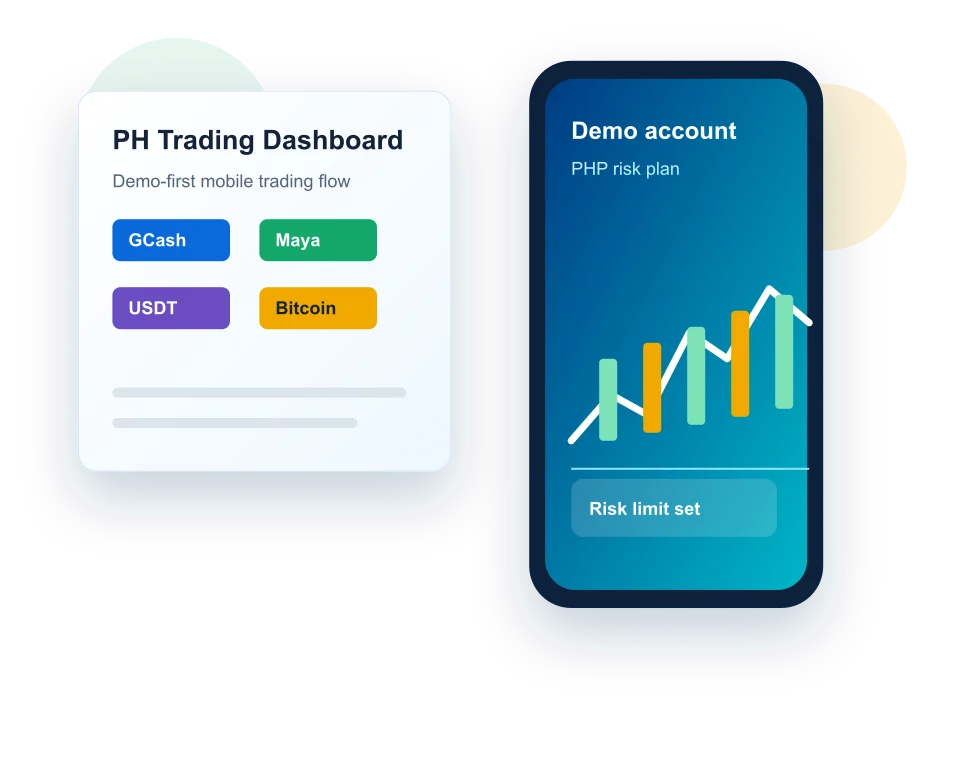
Mobile trading dashboard mockup with GCash, Maya, USDT and Bitcoin payment context
Published: 2026-05-29 Updated: 2026-05-31 Fact checked: 2026-05-31

Written by

Mica Villanueva

Manila Mobile Trading UX Editor based in Manila.

Mica Villanueva owns the first draft and local examples for Online Trading in the Philippines.

Demo onboarding Trading app UX Facebook and Telegram source checks Beginner education
View author profile

Risk reviewed by

Patricia Dela Cruz

Quezon City Trading Risk and Editorial Standards Reviewer based in Quezon City.

Patricia Dela Cruz reviews Online Trading in the Philippines for capital-loss wording, service restrictions, payment uncertainty, and affiliate disclosure.

Risk review Risk disclosure Affiliate transparency Corrections and standards
View reviewer profile

Trading mechanics

What was checked

  • For Online Trading in the Philippines, Mica checks that assets, indicators, signals, and session notes are explained as learning context rather than profit signals.
  • Commercial links on Online Trading in the Philippines remain marked sponsored and nofollow.
  • Corrections for Online Trading in the Philippines use dated sources and visible update records.

Online Trading Philippines

What Filipino users should know first

The most important online trading habit is not choosing a deposit method. It is filtering claims. If a Facebook post, Telegram group, or video promises daily profit, certain withdrawals, or a secret signal, treat that as a risk signal, not proof.

A Philippines-first online trading page should help users compare source, app, payment route, demo behavior, withdrawal requirements, and capital risk. That is why this guide links every commercial step back to risk and verification.

Online trading can be convenient from a phone, but convenience can increase overtrading. Use session limits, demo notes, and a written stop rule before opening any live trade.

Detailed guidance

Online Trading in the Philippines: Practical Checks

For Online Trading in the Philippines, the checks below focus on the decision a Filipino user actually has to make before moving to the next step.

Mechanics first

  • The core online-trading question is whether the user can verify the source, resist social pressure, and afford full capital loss.
  • For Online Trading in the Philippines, learn what the asset, expiry, indicator, session, or signal actually changes before treating it as a trade idea.
  • A fast interface or clean chart does not make the product low risk.

Demo evidence

  • Test one idea across several demo sessions using the same watchlist and written stop rule.
  • Record mistakes, emotional state, entry reason, and rule compliance.
  • Do not treat one streak as readiness for live exposure.

Pressure filters

  • Do not follow urgent deposit prompts, recovery managers, or private account payment instructions.
  • Screenshots, paid signal groups, influencer clips, and copy-trading profiles can hide losing sessions.
  • Stop if the next trade is motivated by recovery, proof, boredom, or social pressure.

Action checklist

What to Check on This Page

For Online Trading in the Philippines, these checks come from the page topic itself rather than a broad safety list.

First check

Verify the domain before login.

Before acting

Do not send money to personal accounts from chat groups.

Record to keep

Check payment options only inside the account cashier.

Stop signal

Use demo for several sessions before live trading.

Next review

Read the risk disclosure before treating trading as a side-income idea.

Quick answer

Online Trading in the Philippines in Plain English

The core online-trading question is whether the user can verify the source, resist social pressure, and afford full capital loss.

Best for

You came from search, Facebook, Telegram, YouTube, TikTok, or a referral link and need a calm decision path.

Next step

Run the scam checklist before logging in or sending funds, then use demo and set a PHP loss limit.

Do not assume

Do not follow urgent deposit prompts, recovery managers, or private account payment instructions.

Safety check

Pause Before You Continue

Use this Online Trading in the Philippines check before treating a chart, asset, indicator, strategy, signal, or copy-trading profile as actionable.

Stop if

  • The reason to trade is recovery, boredom, pressure, or proof of skill.
  • The idea comes from a paid signal group with no full-session record.
  • The planned loss would affect essential PHP expenses.

Verify first

  • Test the same setup on demo across several sessions.
  • Write the session limit, stop rule, and watchlist before opening a trade.
  • Review asset volatility and timing instead of chasing movement.

Practical playbook

Verification Steps

This is the operational layer behind the page: what to verify, what to record, when to stop, and which mistake would make the search harmful instead of useful.

Source check

Start from the current official website or account screen before acting. Old videos, copied screenshots, Telegram instructions, and Facebook comments are not enough evidence for a money decision.

Eligibility check

If current terms restrict your location, stop. A guide can explain research steps, but it should not encourage VPN workarounds, account misrepresentation, or payment routing that bypasses service rules.

Risk check

Write the planned amount in PHP, assume the whole amount can be lost, and ask whether the loss would affect rent, food, tuition, debt, remittance duties, or emergency savings.

Market context

Understand what the asset is, when it moves, what affects volatility, and why a short expiry can produce emotional decisions. A chart tool is not a prediction engine.

Indicator limits

Indicators, signals, social trading, and copy features can organize decisions, but they do not remove risk. Treat every tool as a hypothesis that must be tested in demo first.

Session rules

Pick a session time, maximum trades, loss stop, and review moment before opening the platform. Mobile trading without session rules turns every notification into a potential trigger.

Evidence over hype

Screenshots of payouts, edited dashboards, and influencer claims do not prove typical results. Useful evidence is repeatable practice data and clear understanding of loss conditions.

After reading

Reader Checkpoints

A useful high-risk financial page should leave the reader with concrete judgment, not just a keyword answer. These checkpoints define the usefulness standard for this guide.

Answer the main question

You should be able to explain the practical answer for Online Trading Philippines without relying on an influencer, chat admin, or outdated screenshot. If the answer depends on current account screens, that uncertainty should remain visible.

Know the proof needed today

You should know which current evidence matters: official terms, account cashier, payment receipt, provider record, transaction hash, KYC request, support ticket, or regulator context depending on the task.

Choose the safest next page

The recommended next step is not always a sponsored click. For this topic, the next useful action is: Run the scam checklist before logging in or sending funds, then use demo and set a PHP loss limit.

Recognize stop signals

You should know what not to assume: Do not follow urgent deposit prompts, recovery managers, or private account payment instructions. Add OTP, MPIN, password, seed phrase, recovery-agent, and personal-account payment requests to that stop list.

Keep records before stress

You should know which records to save before there is a problem. Good records make support conversations clearer and reduce the chance of accepting unsafe shortcuts later.

Why trust this page

Visible Editorial Controls

These controls are shown on-page so the reader can judge accountability before following a payment, app, demo, or trading-related instruction.

Natural-person authorship

Mica Villanueva covers this topic area from Manila: Demo onboarding and Trading app UX. The profile page explains scope, limits, topic ownership, and reviewed page types.

Risk review

Patricia Dela Cruz checks the copy for capital-loss language, service restrictions, payment uncertainty, vulnerable-user risk, and affiliate disclosure.

Usefulness check

The page must answer the task directly, show the next useful internal link, and avoid unsupported promises about availability, results, or withdrawals.

Correction path

Readers can request updates with the page URL, exact claim, current source, screenshot context, and the date the source was checked.

Reader protection

YMYL Safeguards for Online Trading in the Philippines

This page can influence money, privacy, app access, or account behavior. These safeguards show what can go wrong and what the reader should do before acting.

Capital loss

Assets, indicators, strategies, signals, and copy trading can all produce losses.

Test on demo, set a PHP loss limit, and never trade essential money.

False confidence

A clean chart, payout screenshot, or winning streak can hide losing sessions.

Track full-session notes instead of trusting isolated wins.

Social influence

Groups can push urgent trades or VIP signals.

Stop when the reason to trade is pressure, recovery, or proof.

Trust ledger

Claims We Do and Do Not Make

This ledger is designed to prevent vague E-E-A-T signals. It states the boundary behind claims that could affect money, eligibility, privacy, or trading behavior.

Claim area Boundary Reader action
Local authorization This guide does not claim local authorization unless a current operator or regulator source proves it. Check current official terms and regulator context before account action.
Payment availability GCash, Maya, GrabPay, online banking, USDT, and Bitcoin are treated as account-screen checks, not permanent promises. Verify your own cashier route, fees, limits, and withdrawal implications.
Trading outcome No page promises income, typical profit, safe trading, or guaranteed withdrawals. Assume the full deposit can be lost and use demo before live exposure.
Affiliate relationship Commercial links may earn compensation and are marked sponsored/nofollow where appropriate. Use the disclosure, risk page, and current sources before clicking.
Signals and strategies Indicators, copy trading, and signal claims are treated as hypotheses, not proof. Test on demo and reject guaranteed-profit claims.
Sources and limits

How Online Trading in the Philippines Was Checked

For Online Trading in the Philippines, the review focuses on claims that could affect money, account access, payment records, eligibility, privacy, or trading risk.

Check What we verified Boundary
Product mechanics Online Trading in the Philippines is reviewed for clear explanation of assets, expiry, volatility, indicators, signals, or trading sessions. When reviewing Online Trading in the Philippines, no chart tool, signal, or asset category is presented as a reliable income source.
Demo use When reviewing Online Trading in the Philippines, the page asks users to test repeatable ideas on demo before live exposure. When reviewing Online Trading in the Philippines, demo results do not predict live results.
Social proof When reviewing Online Trading in the Philippines, influencer clips, edited dashboards, and signal screenshots are treated as claims, not evidence. When reviewing Online Trading in the Philippines, typical-profit or guaranteed-result language is not allowed.

FAQ

Online Trading in the Philippines FAQ

Why mention Facebook and Telegram?

Many Filipino users discover trading platforms through social channels, where fake screenshots and income claims can spread quickly.

Is online trading the same as investing?

No. Fast-expiry trading is speculative and can lose capital quickly. It should not be treated like long-term investing.

What is the safest first step?

Use demo mode, learn the interface, and decide in advance how much you can afford to lose.

High-risk product category

Trading can lead to full capital loss

Trading financial instruments involves a high risk of losing capital. Online Trading in the Philippines is informational only and does not provide financial, legal, or tax advice. Verify current platform terms, payment availability, and local rules independently before acting.

Read risk disclosure
Demo Continue